The short answer
Most ceremonies work with one to four musicians. A soloist or duo suits small, intimate ceremonies and tight budgets. A trio or quartet fills larger spaces and outdoor ceremonies with a fuller sound. The right number depends on guest count, the venue's size and acoustics, whether there's amplification, and the couple's budget.
Then plan the music itself. See planning the timeline and set list.
Common lineups
- Soloist: violin, guitar, harp or piano. Intimate, flexible and budget-friendly.
- Duo: more texture, still compact. Works well for small and medium ceremonies.
- Trio: a fuller sound for medium and larger guest counts.
- Quartet: the classic choice for larger ceremonies, churches and outdoor spaces.
What should decide it
- Guest count and space: bigger rooms and lawns need more sound, or amplification.
- Outdoors: sound disappears in open air; more players or a small sound system helps.
- Song choices: some arrangements need more players to sound right.
- Budget: each extra musician adds to the price.
How to advise couples
Offer two or three lineup options as packages, explain the difference in sound, and recommend one based on their venue and guest count. Couples appreciate a clear recommendation.
How BookLive helps
- Packages by lineup. Offer solo, duo, trio and quartet options in one proposal. See writing a proposal.
- Seats per lineup. Each gig's seats match the lineup the couple booked.
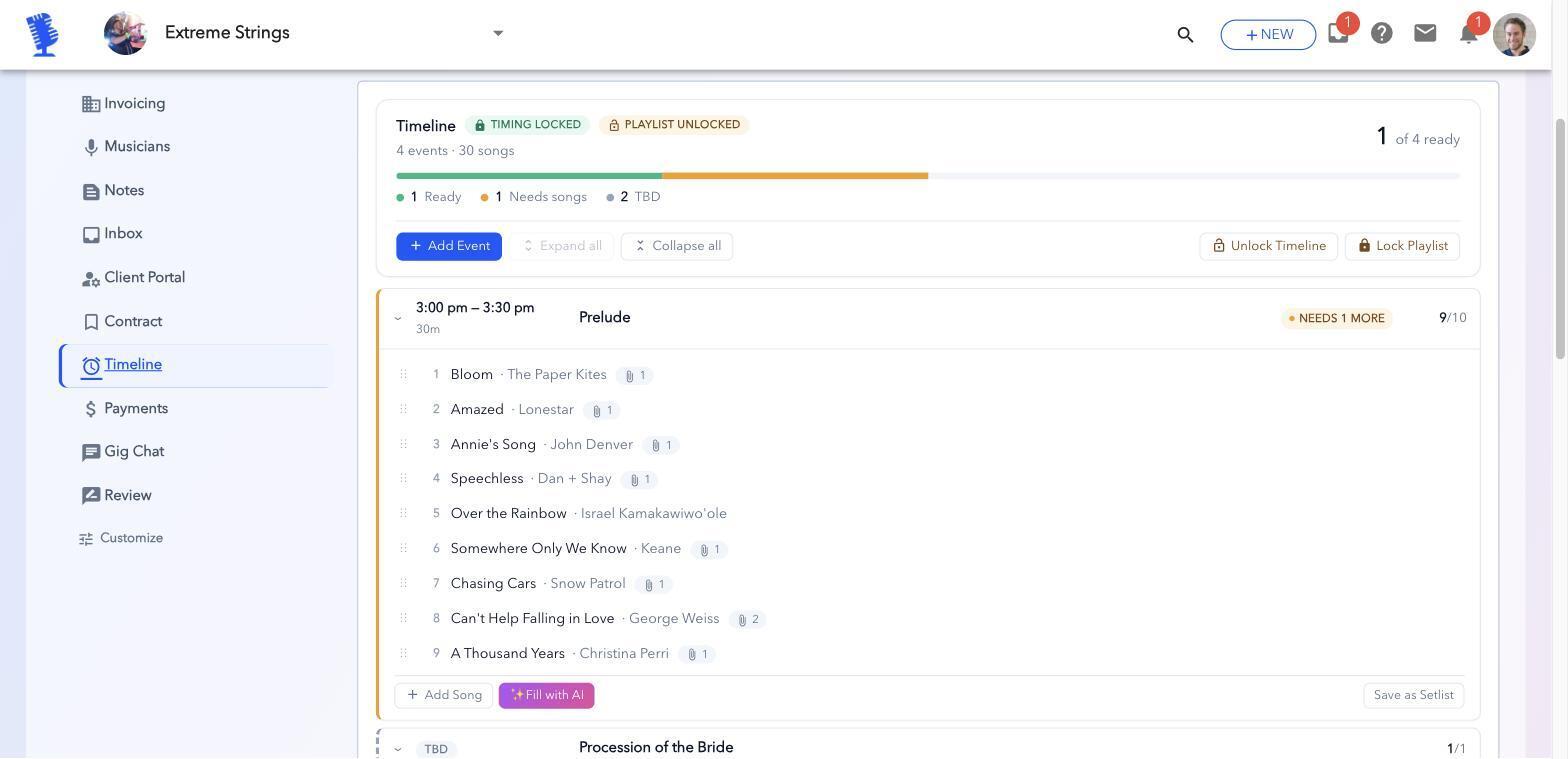
- Ceremony timelines. Prelude, processional and recessional, each with its own songs.

Your musicians use BookLive for free. Only the bandleader pays.
Frequently asked questions
Is a solo musician enough for a wedding ceremony?
For small, intimate ceremonies, often yes. Larger or outdoor ceremonies usually benefit from more players or amplification.
Is a string quartet too much for a small wedding?
Not necessarily, but a duo or trio may suit the space and budget better.
Offer ceremony packages in BookLive
Lineup options, ceremony timelines and staffing in one place.
Your musicians never pay.